Crema Catalana Recipe
Introduction
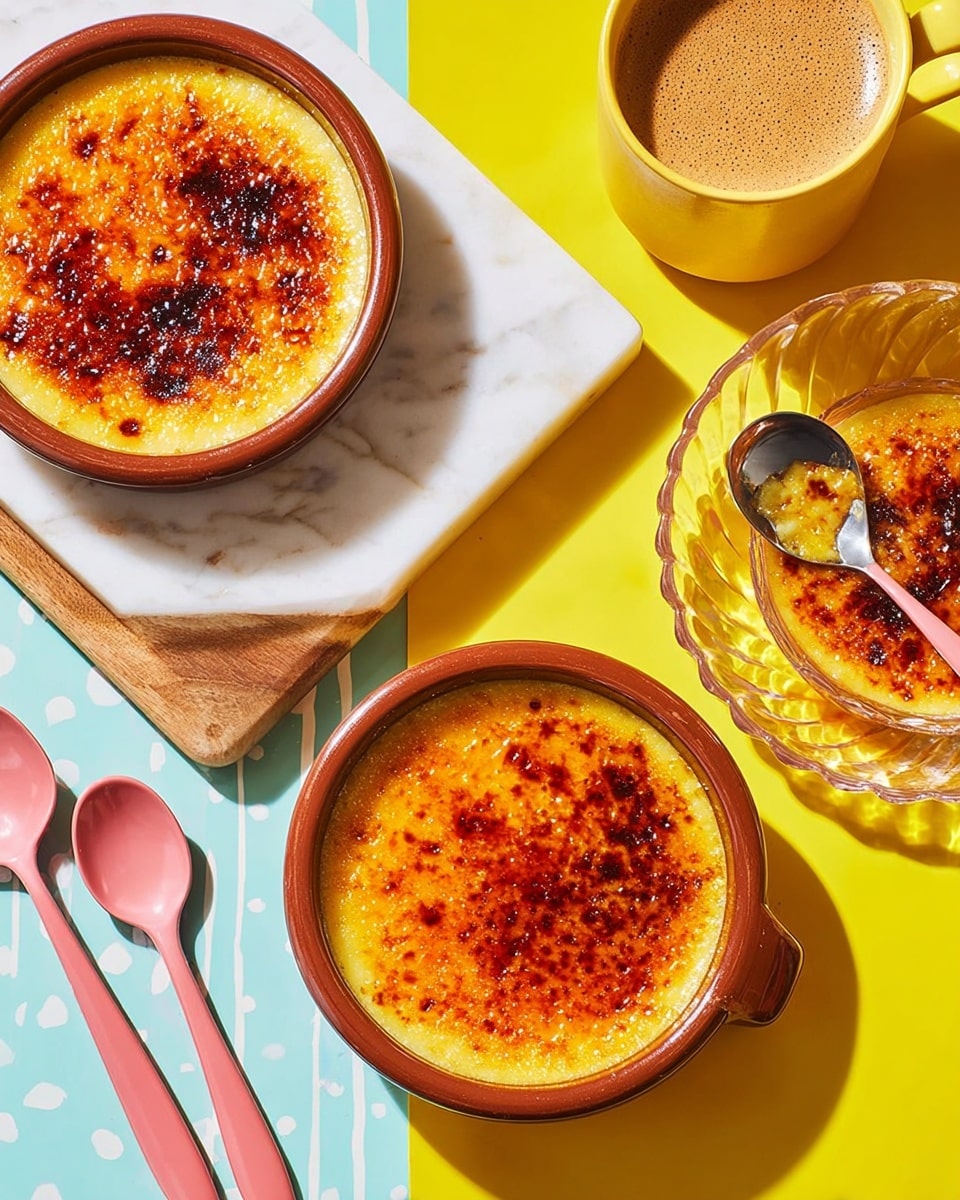
Crema Catalana is a classic Spanish dessert with a rich, creamy custard base infused with citrus and cinnamon, topped with a crisp layer of caramelized sugar. It’s a delightful treat that balances smooth textures with a crunchy finish, perfect for any occasion.
Ingredients
- 400ml whole milk
- 150ml double cream
- 1 cinnamon stick
- 1 orange, zest pared into strips
- 1 lemon, zest pared into strips
- 7 egg yolks (freeze the whites to use in another recipe)
- 100g caster sugar, plus 6 tbsp for the topping
- 45g cornflour
Instructions
- Step 1: Put the milk, cream, cinnamon stick, and all the citrus zest in a saucepan over medium heat. Cook, stirring often, until the milk is just steaming but not boiling, about 3–5 minutes. Remove from heat, cover with a plate, and leave to infuse for at least 30 minutes.
- Step 2: Whisk the egg yolks, 100g caster sugar, and cornflour together in a separate bowl for 3–5 minutes, until light and pale. Strain the infused milk through a sieve into the egg mixture while whisking continuously. Return the combined mixture to the saucepan.
- Step 3: Heat the saucepan over medium-high and whisk continuously for 10–12 minutes until the mixture thickens to a custard-like consistency. Test by dipping a wooden spoon into the custard and running your finger across the back—if the line stays clear, it’s ready. Strain the custard into a jug to remove any froth.
- Step 4: Divide the custard evenly among six 150ml ramekins or small terracotta dishes. Let cool at room temperature for 1 hour until set with a slight wobble, then chill overnight.
- Step 5: Just before serving, sprinkle 1 tablespoon of caster sugar evenly over the top of each ramekin. Caramelize the sugar using a kitchen blowtorch or place under a hot grill until the sugar melts, bubbles, and turns golden. Serve immediately.
Tips & Variations
- Use a fine zester or vegetable peeler to get thin strips of citrus zest without the bitter white pith.
- For a different flavor, try infusing the milk with star anise or vanilla bean instead of cinnamon and citrus.
- The sugar topping can be caramelized with a kitchen blowtorch for even, controlled caramelizing or under a grill for a quick alternative—just watch carefully to prevent burning.
- Freeze the leftover egg whites to use in meringues or other recipes to reduce waste.
Storage
Store Crema Catalana covered in the refrigerator for up to 2 days. Caramelize the sugar topping just before serving, as it will soften and lose its crispness if done too far in advance. Reheating is not recommended, as it may affect the custard’s texture.
How to Serve
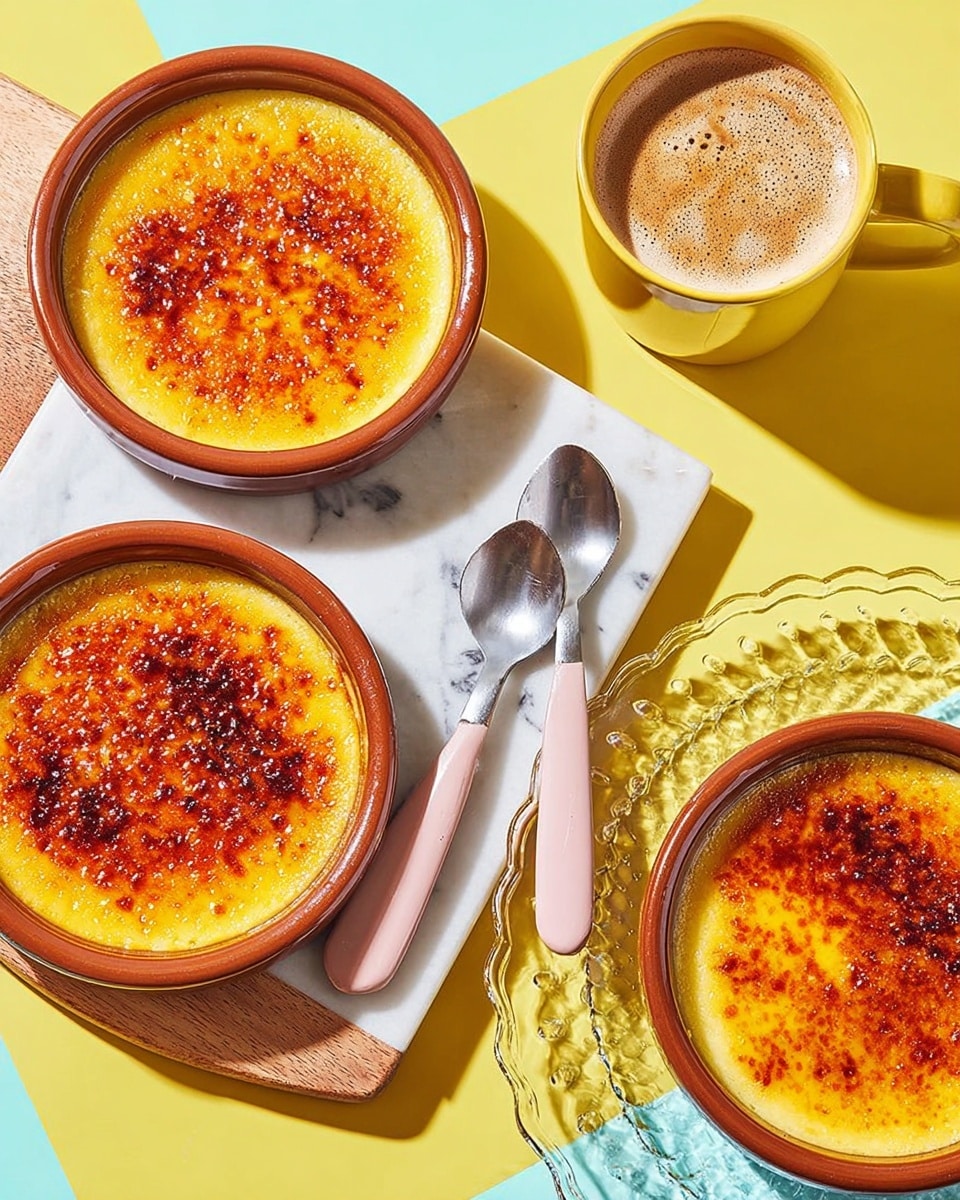
Serve this delicious recipe with your favorite sides.
FAQs
Can I make Crema Catalana without a kitchen blowtorch?
Yes, you can caramelize the sugar topping under a very hot grill or broiler. Place the ramekins on a baking tray about 10cm from the heat source and watch closely to prevent burning.
What can I do with the leftover egg whites?
Egg whites can be frozen and saved for future use in recipes such as meringues, macarons, or egg-white omelets. Freeze them in a sealed container and label with the date for up to 3 months.
Print
Crema Catalana Recipe
- Total Time: 12 hours 55 minutes
- Yield: 6 servings 1x
- Diet: Vegetarian
Description
Crema Catalana is a traditional Spanish dessert featuring a creamy, citrus-infused custard topped with a crisp, caramelized sugar crust. This rich and aromatic treat combines cinnamon, orange, and lemon zest for a refreshing twist on classic custard, finished with a brûléed sugar topping for a delightful contrast of textures.
Ingredients
Custard Base
- 400ml whole milk
- 150ml double cream
- 1 cinnamon stick
- Zest of 1 orange, pared into strips
- Zest of 1 lemon, pared into strips
- 7 egg yolks (freeze the whites for another recipe)
- 100g caster sugar
- 45g cornflour
Topping
- 6 tbsp caster sugar
Instructions
- Infuse Milk and Cream: In a saucepan over medium heat, combine the whole milk, double cream, cinnamon stick, and strips of orange and lemon zest. Cook while stirring frequently until the milk mixture is steaming but not boiling, about 3-5 minutes. Remove from heat, cover with a plate, and let it infuse for at least 30 minutes to extract the flavors.
- Prepare Egg Mixture: In a separate bowl, whisk the egg yolks, 100g caster sugar, and cornflour together vigorously for 3-5 minutes until the mixture is light and pale in color, creating a smooth base for the custard.
- Combine and Strain: Strain the infused milk mixture through a sieve into the egg mixture, whisking continuously to combine without curdling. Return this combined mixture to the saucepan.
- Cook Custard: Place the saucepan over medium-high heat and whisk continuously for approximately 10-12 minutes. The custard will thicken to a creamy consistency; test by dipping a wooden spoon and running your finger across the back—if the line holds, the custard is ready. Strain the custard once more to remove any froth or lumps.
- Chill Custard: Divide the smooth custard evenly among six 150ml ramekins or small terracotta dishes. Allow to cool at room temperature for 1 hour until slightly set and wobbling. Then refrigerate overnight to fully set.
- Caramelize Sugar Topping: Just before serving, sprinkle 1 tablespoon of caster sugar evenly over each ramekin. Using a kitchen blowtorch, caramelize the sugar until golden and bubbly, or alternatively, place the ramekins under a hot grill until the sugar melts and caramelizes. Serve immediately to enjoy the crisp sugar crust against the creamy custard.
Notes
- Freeze the leftover egg whites for use in recipes like meringues or macarons.
- If you don’t have a blowtorch, the grill method works well—just watch carefully to avoid burning.
- This dessert benefits from overnight chilling for the best texture and flavor melding.
- Be careful not to boil the milk or the custard mixture to prevent curdling.
- Prep Time: 40 minutes
- Cook Time: 15 minutes
- Category: Dessert
- Method: Stovetop
- Cuisine: Spanish
Keywords: Crema Catalana, Spanish custard dessert, caramelized custard, cinnamon, citrus zest dessert, traditional Spanish dessert