
Radish Kraut Recipe
Introduction
Radish kraut is a crisp, tangy fermented side that’s bursting with vibrant flavors and a gentle kick from chilli and garlic. This simple recipe transforms everyday radishes into a lively, probiotic-rich condiment perfect for adding a zing to your meals.
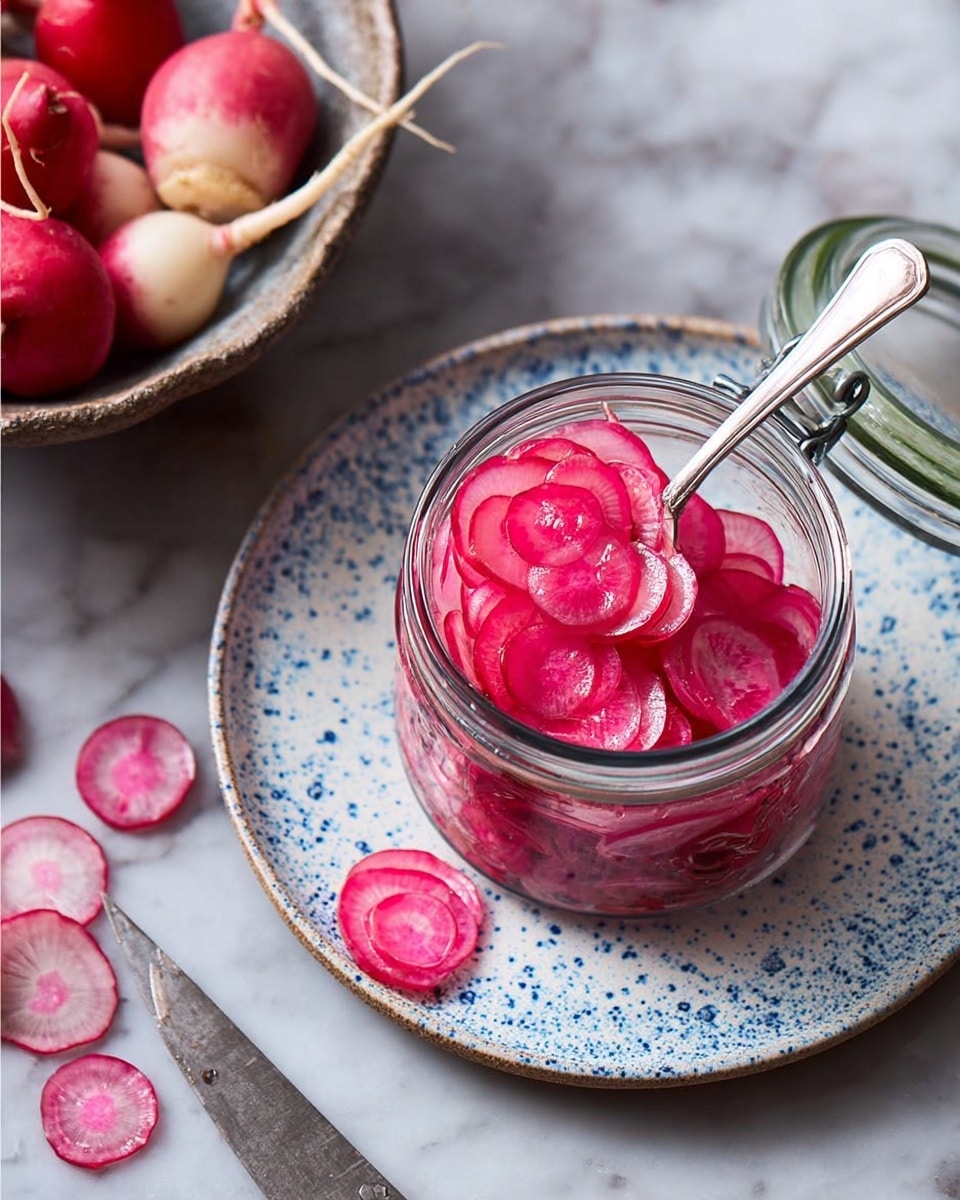
Ingredients
- 300g radishes, washed and finely sliced (preferably using a mandolin)
- ½ red pepper, finely chopped
- 2 tsp sea salt
- ½ tsp demerara sugar
- 2 garlic cloves, crushed
- 1 red chilli, deseeded and finely chopped
- Still mineral water, to top up
Instructions
- Step 1: Sterilise your jars thoroughly before beginning to ensure a clean fermentation environment.
- Step 2: In a bowl, combine the sliced radishes and chopped red pepper with the sea salt and demerara sugar. Using your hands, scrunch and squeeze the vegetables to release their juices. Leave the mixture to cure for 1 hour, then squeeze again for about 10 minutes to extract more liquid.
- Step 3: Add the crushed garlic and chopped red chilli to the vegetable mix and squeeze again to combine the flavors.
- Step 4: Firmly pack the radish mixture into the sterilised jar, pressing down hard to remove any air bubbles. Use the end of a clean rolling pin or a similar tool to press the vegetables down. The brine should cover the vegetables; if it doesn’t, add still mineral water to ensure they are fully submerged, leaving about 2-3cm of space at the top of the jar.
- Step 5: Scrunch up some baking parchment and push it firmly into the jar to weigh down the vegetables and keep them under the brine.
- Step 6: Cover the jar with clean muslin and secure with a rubber band. Place the jar on a cool, dark shelf for 4 to 7 days, depending on how sour and funky you like your kraut.
- Step 7: Check your ferment daily. Remove the muslin and parchment to release gases (this is called burping) before resealing. The fermentation speed will vary with temperature—warmer weather speeds it up, cooler weather slows it down.
- Step 8: When the kraut reaches your desired taste, remove the parchment and muslin, seal the jar with a lid, and store it in the fridge to halt further fermentation.
Tips & Variations
- If you prefer a milder heat, reduce or omit the chilli. For extra flavor, try adding a teaspoon of caraway or mustard seeds before fermenting.
- Use a mandolin for evenly sliced radishes to help them release juices more consistently.
- Ensure the vegetables are always submerged under the brine to prevent mold and spoilage.
Storage
Once fermented to your liking and sealed in the fridge, radish kraut will keep for several months. Store it in a clean airtight jar and always use a clean spoon to serve. The flavor will continue to develop slowly in the fridge but fermentation will significantly slow down.
How to Serve
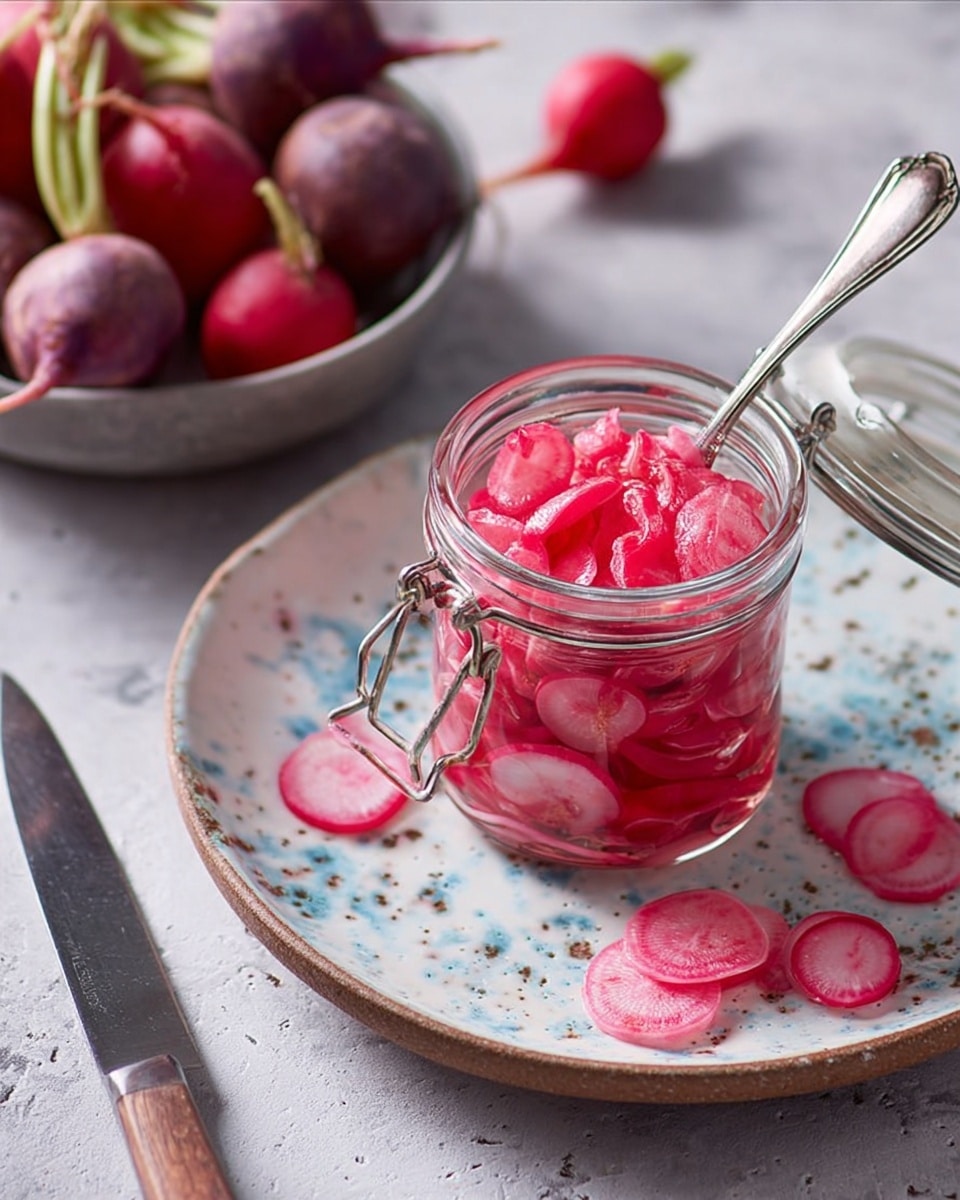
Serve this delicious recipe with your favorite sides.
FAQs
Why do I need to press down the vegetables so firmly?
Pressing down removes air pockets and helps the vegetables stay submerged under the brine, creating an anaerobic environment essential for safe and successful fermentation.
What should I do if I see bubbles or foam during fermentation?
Bubble formation is normal as gases are produced during fermentation. Gently burp the jar daily by loosening the lid or removing the muslin and parchment to release the pressure safely.
Print
Radish Kraut Recipe
- Total Time: 4 days 1 hour 30 minutes (up to 7 days depending on fermentation preference)
- Yield: 1 quart (approximately 4 servings) 1x
- Diet: Low Fat
Description
This Radish Kraut recipe is a vibrant, tangy fermented side dish made by curing radishes and red pepper with sea salt, sugar, garlic, and chili. The fermentation process creates a probiotic-rich kraut with a crunchy texture and a spicy kick, perfect for adding brightness to meals or enjoying as a healthy snack.
Ingredients
Vegetables
- 300g radishes, washed and finely sliced (preferably using a mandolin)
- ½ red pepper, finely chopped
- 2 garlic cloves, crushed
- 1 red chilli, deseeded and finely chopped
Seasoning
- 2 tsp sea salt
- ½ tsp demerara sugar
Additional
- Still mineral water, to top up
Instructions
- Sterilise Jars: Before starting the fermentation, sterilise your jars thoroughly to ensure they are free from bacteria or contaminants that could spoil the kraut.
- Combine and Cure Vegetables: In a bowl, combine the sliced radishes and chopped red pepper with sea salt and demerara sugar. Using your hands, scrunch and squeeze the mixture vigorously to release their natural juices. Let this mixture cure for 1 hour.
- Squeeze Again: After the initial curing, squeeze the vegetable mixture again for about 10 minutes to help extract more liquid and begin the fermentation process.
- Add Garlic and Chilli: Add the crushed garlic cloves and chopped red chilli to the vegetable mixture and give it another good squeeze to incorporate the flavors and juices evenly.
- Pack the Jar: Transfer the vegetable mixture into the sterilised jar, pressing down firmly with the end of a clean rolling pin or similar tool to eliminate air pockets and compact the vegetables tightly. The brine released should cover the vegetables; if not, top up with still mineral water to ensure they are fully submerged, leaving 2-3cm of space at the top.
- Weigh Down: Scrunch up some baking parchment, and stuff it firmly into the jar atop the vegetables to weigh them down and keep them immersed in their brine.
- Cover and Ferment: Cover the jar with clean muslin and secure it with a rubber band. Place the jar on a cool, dark shelf to ferment for 4 to 7 days depending on how tangy and funky you like your kraut. Warm conditions speed up fermentation; cooler slow it down.
- Daily Burping: Check the ferment daily, lifting the muslin and baking parchment to release any fermentation gases (burping), then reseal to prevent pressure buildup and jar explosion.
- Seal and Store: Once the kraut reaches your desired taste, remove the baking parchment and muslin, seal the jar with its lid, and store in the fridge. This halts further fermentation and preserves the kraut for months.
Notes
- Ensure vegetables are fully submerged in brine to prevent mold growth during fermentation.
- Fermentation time varies based on ambient temperature – warmer climates speed up fermentation.
- Burp the jar daily to release gases and prevent explosion.
- This kraut keeps well refrigerated for several months once fermentation is complete.
- Use a mandolin for uniform thin slicing to ensure even fermentation.
- Adjust chili quantity to control spice level.
- Prep Time: 1 hour 30 minutes
- Cook Time: 4 to 7 days (fermentation)
- Category: Condiment
- Method: Fermentation
- Cuisine: European
Keywords: radish kraut, fermented vegetables, probiotic kraut, fermented radish, homemade sauerkraut, spicy kraut, fermented condiment